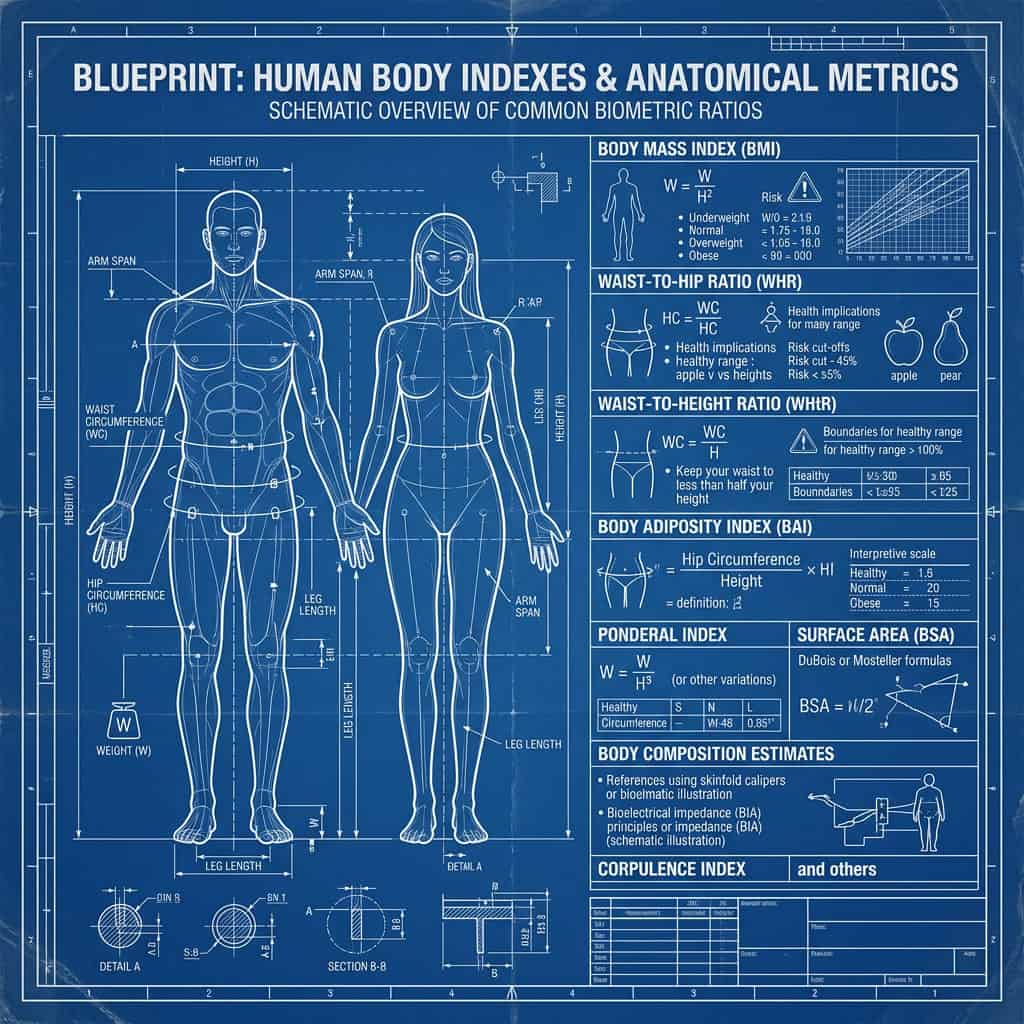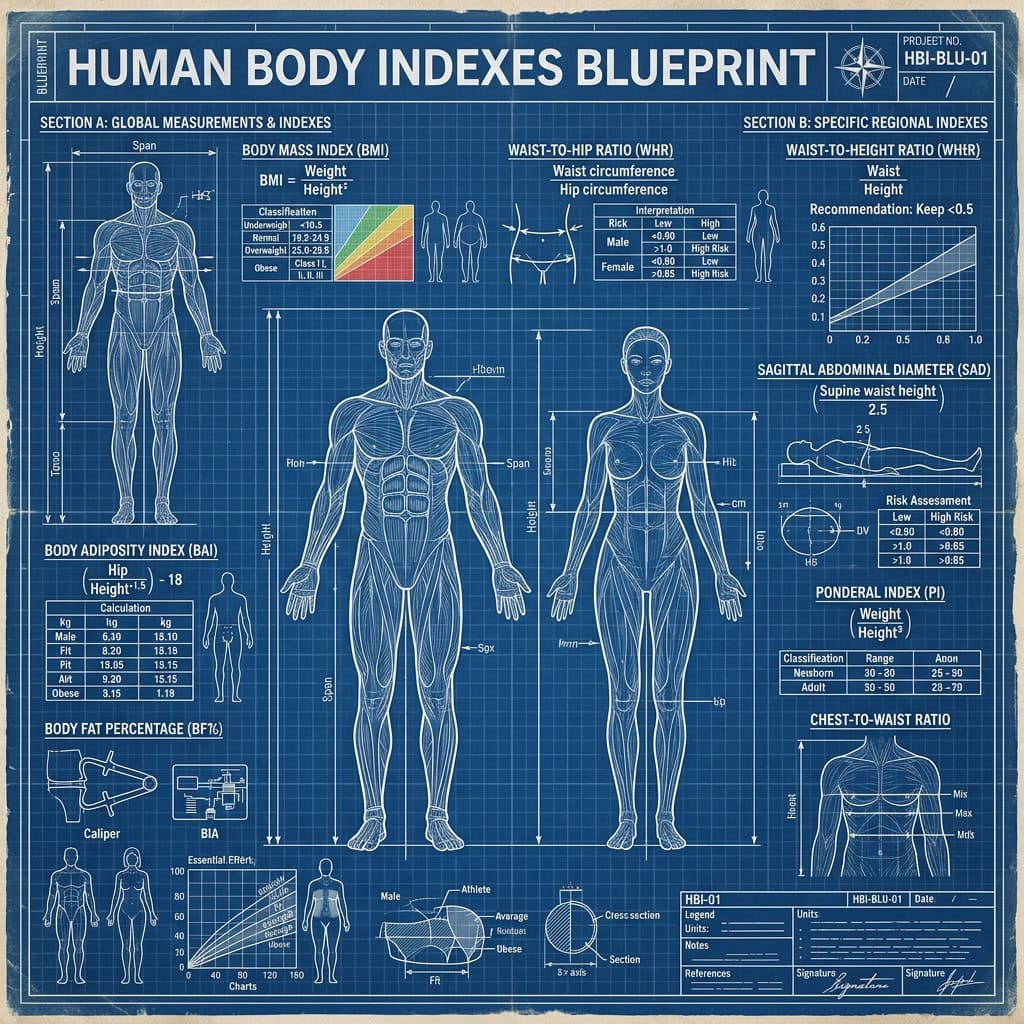
Anthropometry — From the Greek anthropos (“human”) and metron (“measure”), anthropometry is the scientific study and measurement of the proportions, dimensions, and physical characteristics of the human body. In art, sculpture, architecture, and anatomy, anthropometry provides systems of proportional analysis used to understand bodily structure, harmony, scale, and ideal relationships between parts of the figure.
Historically, anthropometry has been employed in physical anthropology, anatomy, ergonomics, medicine, and artistic canon systems to study human variation and proportion. Classical sculptors and architects often relied upon anthropometric principles when establishing proportional canons for the human form.
Body Indexes — Comparative proportional systems used to classify or analyze body types according to measured relationships between anatomical dimensions. Such indexes have historically been used in anatomy, anthropology, medicine, ergonomics, and artistic proportional studies.