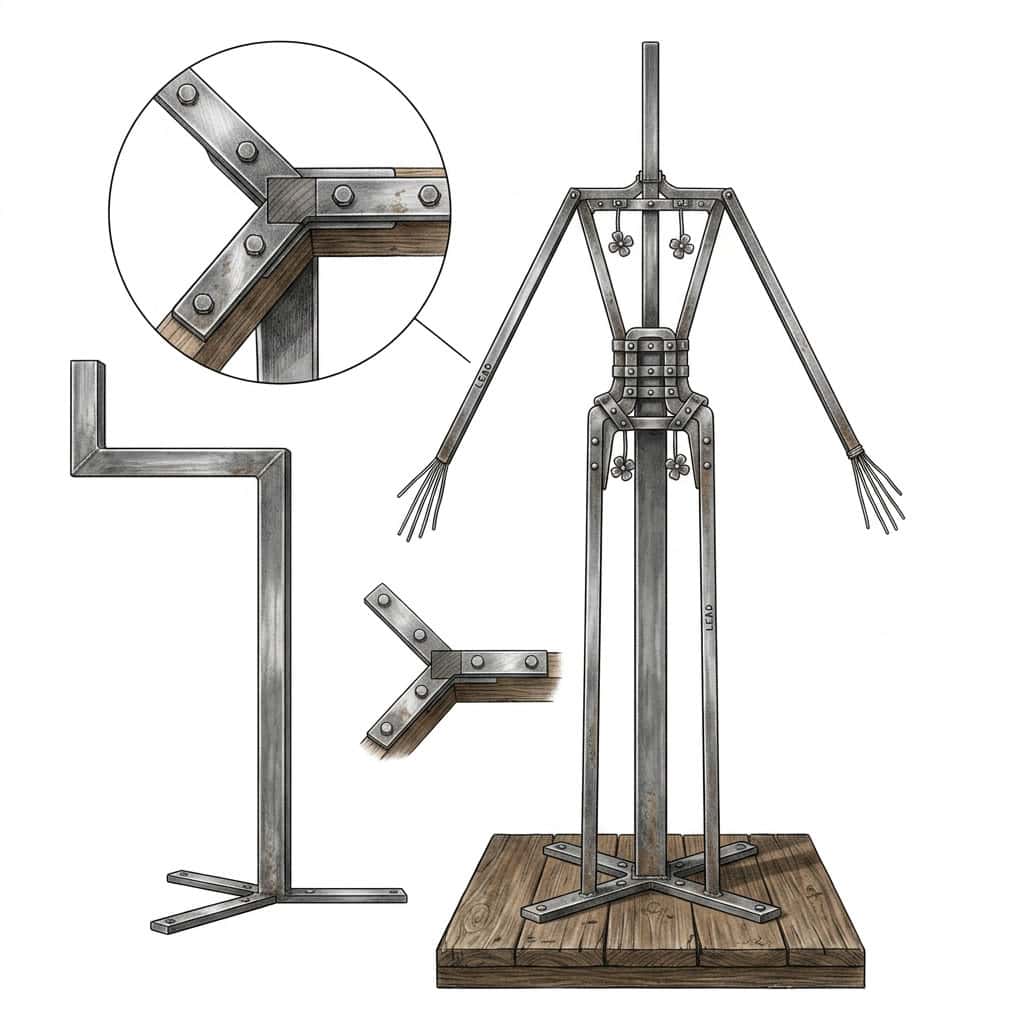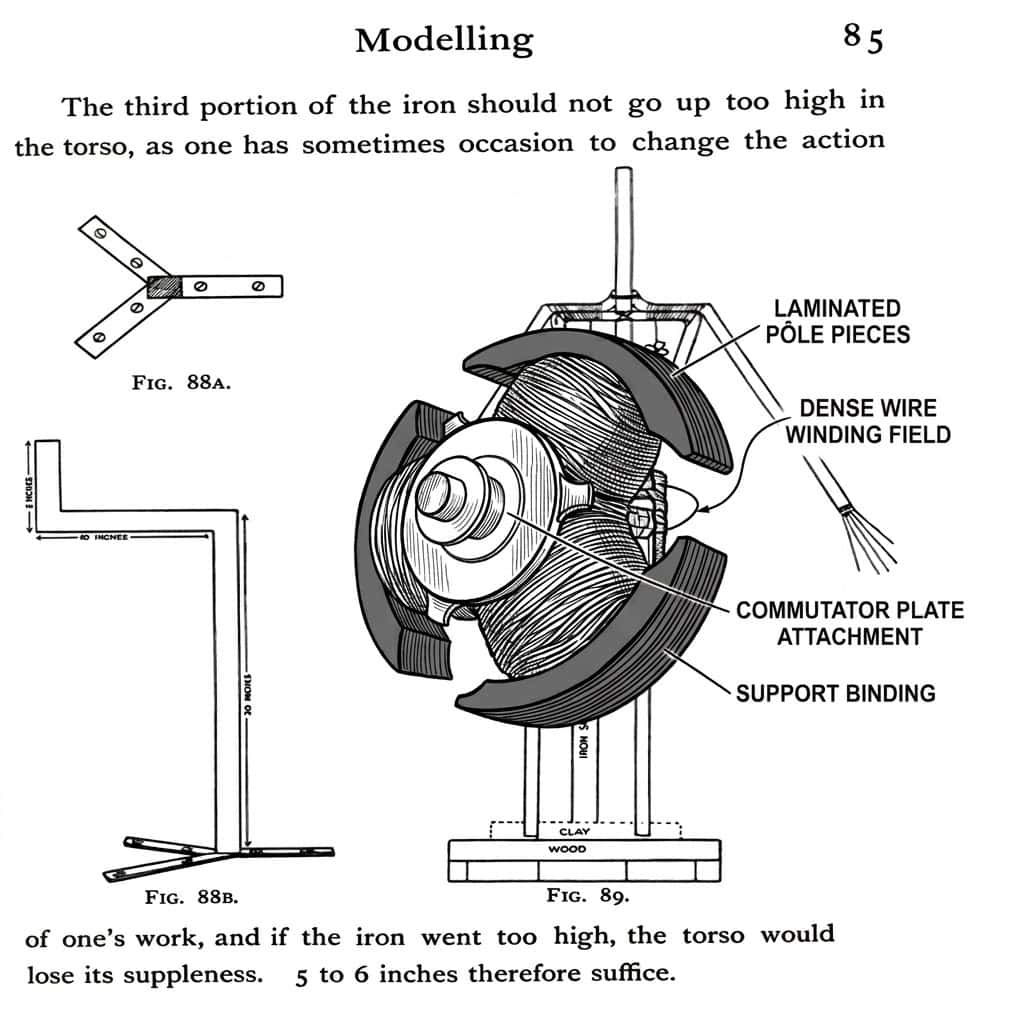
Armature — From the Latin armatura, meaning “framework,” “equipment,” or “fitted structure.” In sculpture, an armature is the internal supporting framework around which modeling material such as clay or plaster is built. Constructed from wood, steel, pipe, wire, or metal rod, the armature serves as the hidden structural skeleton of the sculpture, providing strength, balance, and stability during the modeling process. The term is also used in engineering and electrical systems to describe a structural core around which wire windings or mechanical components are organized, as in the armature of a motor.
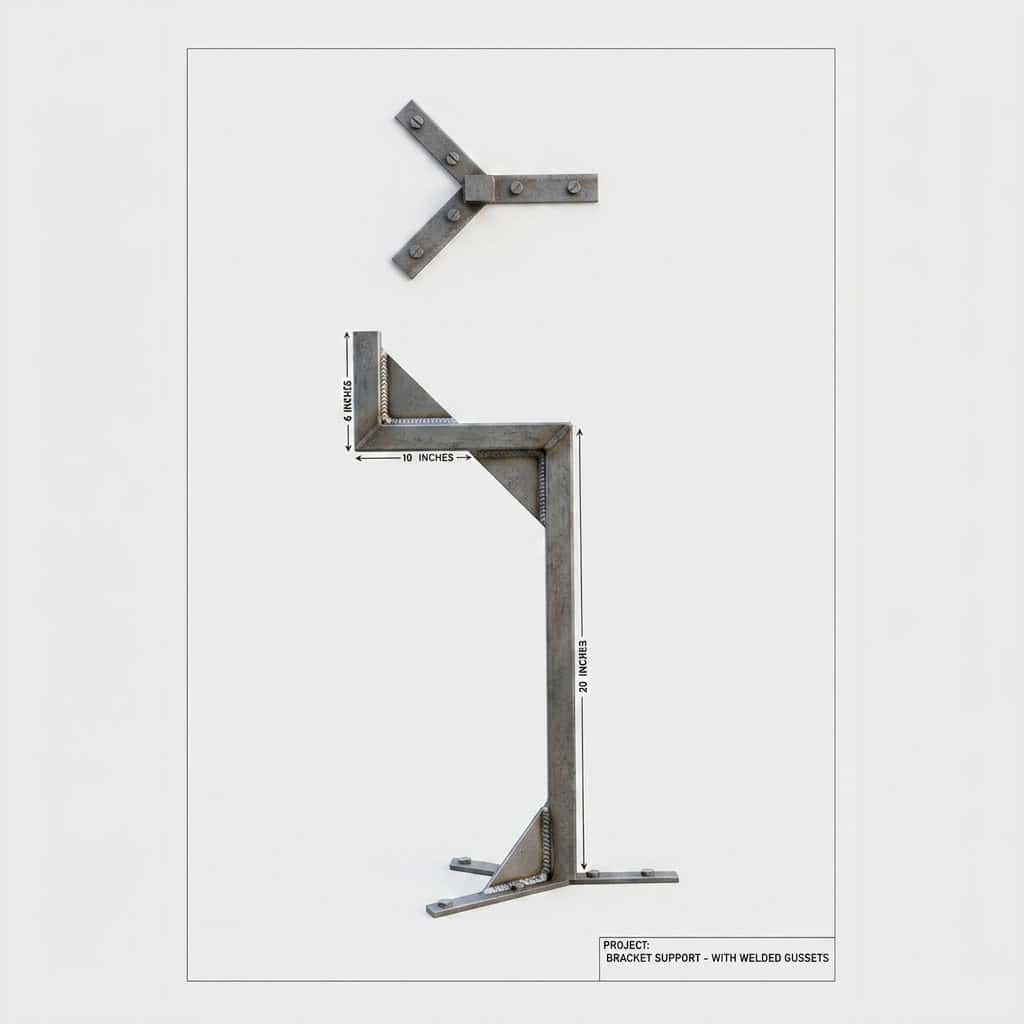
In larger sculptural constructions, reinforcing gussets and structural bracing should be considered when anticipating substantial clay loads or cantilevered forms. When mounting an armature to a baseboard, the sculptor must also account for the eventual dimensions of the mold, including the added space required for mold flanges, parting lines, and structural containment.
Careful forethought should also be given to mold removal and disassembly of the armature itself. Wherever the armature protrudes through the clay surface, consideration must be made as to how the steel will later be extracted without damaging the model or mold. Thoughtful use of removable sleeves, threaded couplings, unions, and modular mechanical fittings can greatly simplify the final stages of mold making and reduce trauma to the clay sculpture during armature removal. Through practical studio experimentation, Peter Forster developed a method utilizing industrial tie-rod couplings and standardized threaded systems, allowing portions of the armature to be disassembled and withdrawn cleanly from the clay during mold separation.